




Recently, I was eating at one of my favorite cafes just outside Apia. I remember trying to slice into my omelet and toast when I heard what sounded like a crash of some kind, and then felt my jacket, plate, table and the painting on the wall beside me become drenched in what I immediately hoped was just water. I turned to take in what has sadly become a common sight in Samoa: a disgruntled customer at the table next to mine had thrown his entire bottle of water onto the floor because “(I) can’t open it and need a new one.” The bottle- a flimsy plastic affair- had complied with the laws of physics and exploded everywhere. The customer’s family were immediately very apologetic…but the damage was done.
Samoa, a country where simple courtesies and tact are supposedly woven into the fabric of all social mores and structures, has in recent years seen a surge in a very specific kind of rudeness that makes itself manifest in public spaces like restaurants and supermarkets. Called ‘Karenism’ in the English-speaking West (yes, that is a real term that even some dictionaries are recognizing), this is a reactive type of antagonistic behavior which is rooted in the modern culture of immediate, self-curated access to everything and anything we could possibly want. As a socio-psycho phenomenon, it is interesting to observe. As an unwelcome impact of globalization on our small Pacific Island nation, it is alarming, sad, and, in the case of the near-assault that I was subjected to at that restaurant, dangerous. Of course, I am not the first and may unfortunately not be the last person caught in a crossfire between entitlement (apparently paying $3 for a water bottle means you can throw it at random people?), service that doesn’t meet customers’ standards (unavoidable: someone somewhere will always be unsatisfied with even ten star hospitality), and the very thin line between ‘the customer is always right’ and the fact that wait-staff also have human rights.
‘Karenism’ has no place in the fa’aSamoa. While globalization itself is a necessary and, for the most part, beneficial aspect of our socio-economic development, I would argue that upholding our culture of fa’aaloalo is integral to resisting the dilution of our customs, language and storied heritage by pan-colonial influences. As Samoans, we learn very early on the importance of negotiation, diplomacy, and maintaining the vā– the sacred space that connects and defines our relationships with other human beings and even with our environment. Colonialism is ugly: it is imposing, entitled, demanding; it puts its foot forward and steps on other people. If we are pressing forward for a truly free Samoa, then let us start by eliminating these harmful foreign attitudes. Let us return to this: if you are unhappy with a restaurant or store’s service, speak to staff directly in a firm but calm manner, noting that the staff who served you were probably not involved in cooking the food or packaging the products. State your disappointment clearly, but without name-calling, violence or yelling. If the staff are continually unhelpful- this is rare in Samoa- proceed to the next step which can include writing a formal complaint, making an appointment with a manager, or, if necessary, seeking support from law enforcement to get your money refunded or address any aggressive behavior which you feel staff are displaying. Often, just talking to the cashier/ wait-staff and their immediate supervisor will get you your money back, a replacement product if you still want to buy from them, and an apology.
As we look forward to the upcoming elections and anticipate how we can all do our part to keep Samoa peaceful and increase its prosperity, let us remember that disrespect does everyone a disservice. Also, a gentle reality-check for the local practitioners of ‘Karenism’: servers are not your servants. If no restaurant or shop in Samoa is up to your standards, stay home and cook yourself your own ideal meal.
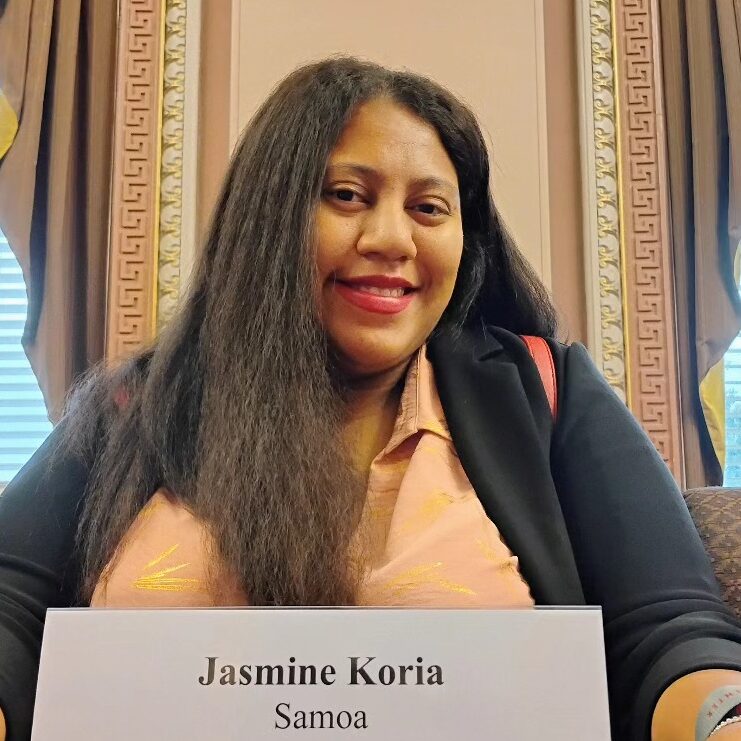
About the Author
Jasmine Koria is a child protection officer with UNICEF Pacific and Co‑Chair of the Samoa Youth Advisory Board. She lectures in communication skills at the Oloamanu Centre and represents Samoa as a Girls in STEM ambassador for Space Kidz India. A Commonwealth Correspondent and former curator for Global Shapers Apia, she has also served as Head of English at Samoa Adventist College and taught at the National University of Samoa.
Jasmine is currently completing her Master of Arts in Online Teaching and Distance Education at the Open University (UK) through the Commonwealth Distance Learning Scholarship. She holds a Bachelor of Arts in International Relations and English Literature from Victoria University of Wellington and is based in Apia, Samoa.