


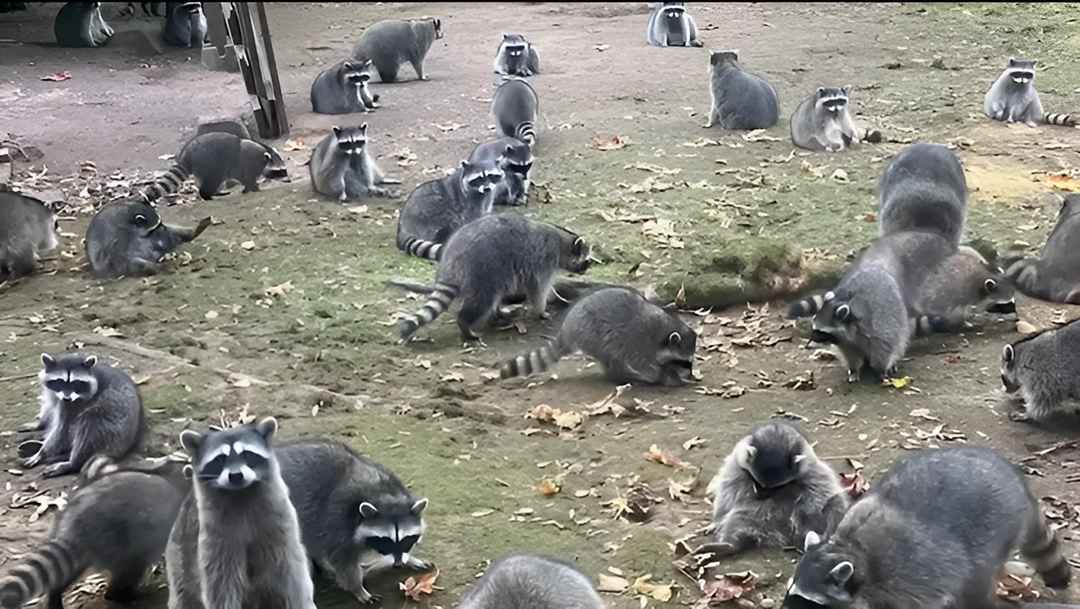

In Kitsap County, Washington, sheriff’s deputies are used to receiving animal-related calls, such as loose livestock or troublesome dogs. However, a recent 911 call from a woman near Poulsbo stood out. She reported being overwhelmed by 50 to 100 raccoons swarming her property and acting aggressively.
According to Kevin McCarty, a sheriff’s office spokesperson, the woman had been feeding a small family of raccoons for decades without issue. But about six weeks earlier, the number of raccoons increased dramatically to nearly 100, and they became increasingly aggressive. The raccoons started demanding food, scratching at her home and car, and even surrounding her when she tried to go outside.
While it’s unclear why the number of raccoons grew so quickly, both the sheriff’s office and the Washington Department of Fish and Wildlife found that no laws were broken. McCarty described it as a “nuisance problem” the woman created by feeding the animals.
Video footage from the sheriff’s office showed large numbers of raccoons roaming the property, and deputies confirmed seeing 50 to 100 of them. Bridget Mire, a spokesperson for the Department of Fish and Wildlife, explained that while it’s illegal to feed large carnivores like bears or cougars in Washington, there are no state laws against feeding smaller wildlife, though it’s discouraged. Feeding wildlife can lead to disease spread and attract predators like coyotes or bears.
A wildlife conflict specialist met with the woman, and she has since stopped feeding the raccoons. Thankfully, the raccoons have started to disperse now that the food source is gone, resulting in a positive outcome.
Poulsbo is located about 90 minutes northwest of Seattle, by car and ferry.
Feeding raccoons may seem harmless, but it can quickly create problems. When raccoons find a steady food source, they tend to gather in large numbers, which can overwhelm a property. This can lead to safety concerns for residents, as raccoons may become aggressive if they expect food and don’t receive it.
Additionally, raccoons can carry diseases, such as rabies and distemper, increasing the risk of transmission when they come into close contact with humans.
Feeding also disrupts their natural foraging behaviours, making them dependent on human-provided food and less capable of surviving in the wild.