



Prime Minister Anthony Albanese has just won a second term. His government is promising more help for Australians, better healthcare, more support with housing, childcare, lower student debt, and help with the rising cost of living. For many, that’s good news.
But what does this mean for the Pacific region? And for Pacific communities living here in Australia?
The Albanese government is also talking a lot about climate change. Over the last few years, they’ve introduced new laws so that big businesses must report their climate risks, created new pollution standards for cars, and made Australia’s biggest polluters follow stronger rules. These are important steps.
But at the same time, they’ve approved more coal and gas projects. That’s left many climate leaders disappointed. Amanda McKenzie from the Climate Council said it best,
“We’ve been doing a lot of the good stuff. But we need to stop the bad stuff too, faster.”
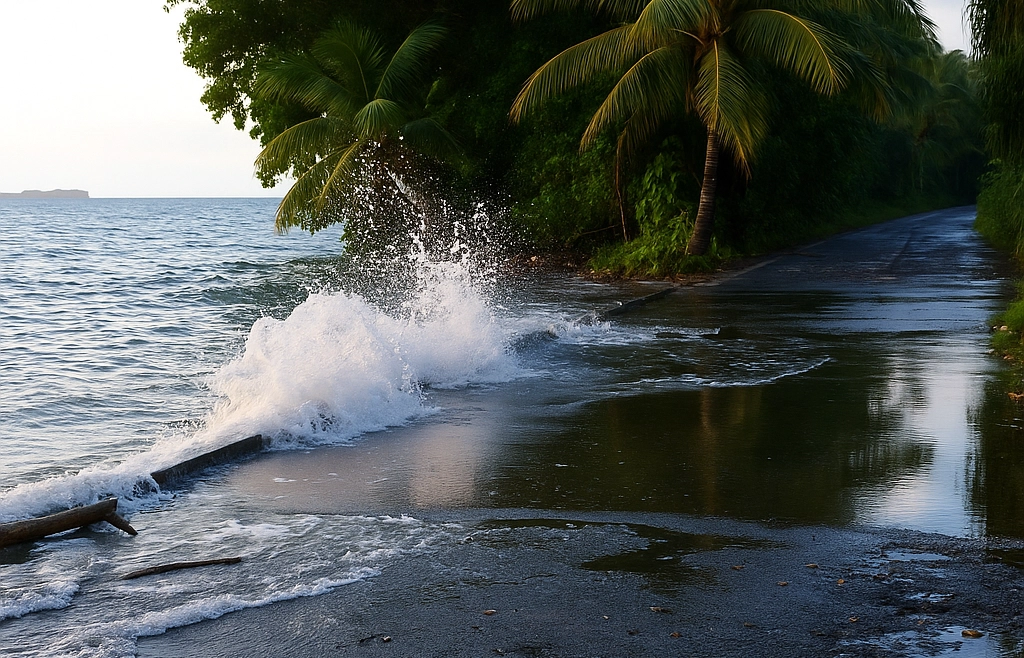
For Pacific people, this is personal. Australia’s decisions on climate and fossil fuels don’t just affect its own land, they affect our islands too. Rising sea levels, stronger cyclones, and food insecurity are already happening. Many of our families are being forced to leave their homes because of climate change, and some are moving here to Australia, especially to places like Western Sydney, where many of us already live.
In this federal election, there’s been a lot of talk about energy and climate, but not enough about people. Especially not enough about us.
As a Pacific Islander living in Sydney, I see how our communities are already struggling with extreme heat, high electricity bills, and overcrowded housing. These problems are made worse by climate change. Yet we’re rarely part of the political conversation.
Pacific leaders in the islands have spoken out many times, asking Australia to stop new fossil fuel projects and take climate change seriously. But while the government says it wants to lead on climate globally, even bidding to host COP31 (the big UN climate meeting) in 2026, it’s still not truly listening to Pacific voices.
Here at home, our Pacific youth are speaking up. We have amazing activists, students, and artists who are leading the way. But within many of our local communities, there’s still a big gap. A lot of our elders and families don’t understand what climate change really is, or how it’s connected to their daily lives. And honestly, why would they? No one has taken the time to explain it properly, in our languages, in our churches, or in the places where our people gather.
That’s why community education is so important.
We need to empower our young people, not just expect them to fix everything. We need churches, youth groups, schools, and local leaders to work together to make sure our families understand what climate change is, how it affects us, and what we can do. We can’t expect our communities to care about something they’ve never been taught.
And we can’t keep leaving this work up to a few Pacific youth or community workers who are already stretched thin. They need proper funding, support, and spaces to lead this work in ways that make sense for our people.
If the Australian government really wants to be a leader on climate, especially in the Pacific, it must do more than pass policies. It must listen. It must include us, Pasifika youth, elders, church leaders, and families, not just as a token, but as partners.
And if COP31 does come to Australia, let it not be just another event for politicians and experts. Let it be a platform where our stories are heard, where our people are present, and where our futures are taken seriously.
The Albanese government has made promises. But now, it needs to make sure those promises include us, our voices, our knowledge, and our futures.