



According to the latest report from the International Monetary Fund (IMF), the global economy is facing a precarious phase in the coming years. The IMF’s World Economic Outlook projects that global economic growth will reach its lowest point at 2.8% this year before slightly recovering to 3% in 2024.
Although global inflation is expected to decrease, it is projected to do so at a slower pace than previously anticipated. The forecast predicts a decline from 8.7% in 2022 to 7% in 2023, and further to 4.9% in 2024.
The IMF highlights that the global economy is unlikely to return to pre-pandemic growth rates in the medium term. In fact, the forecast for 2028 is only 3% growth, the lowest medium-term forecast in any report since 1990. This is due, in part, to the slowing pace of previously rapidly growing economies such as China and Korea, as well as global labour force growth and geopolitical issues like Brexit and the Ukraine invasion.
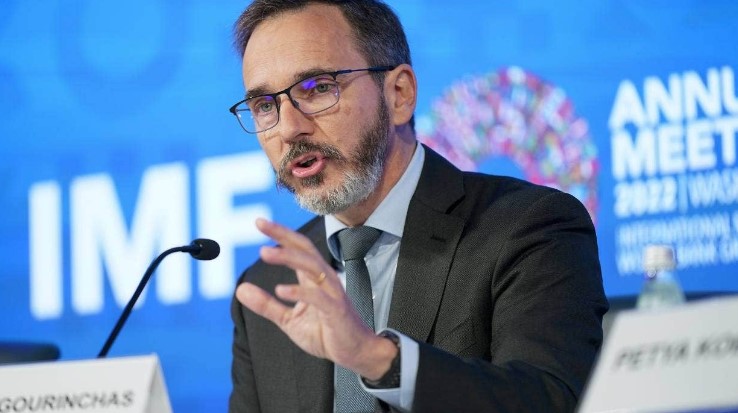
Pierre-Olivier Gourinchas, IMF economic counselor, warns that beneath the surface, turbulence is building, and the situation is “quite fragile.” Recent episodes of banking instability, including the collapse of U.S. banks, have highlighted this fragility.
One concerning factor is the stickiness of inflation, which has not yet peaked in many countries when excluding the volatile energy and food components. Gourinchas, however, remains unconvinced about the risk of an uncontrolled wage-price spiral as workers are not receiving significant wage increases that could lead to concerns about inflation.
A more significant concern for financial stability is the sharp increase in interest rates, which has resulted in significant losses on long-term fixed-income assets. The stability of the financial system relies on its ability to absorb losses without relying on taxpayers’ money, and recent events in the UK gilt market and U.S. regional banks’ collapse have exposed vulnerabilities in the system.
Gourinchas also warns that a sharp tightening of global financial conditions, known as a “risk-off” shock, could have severe repercussions on credit conditions and public finances, particularly in emerging market and developing economies. This could result in capital outflows, increased risk premia, a rush toward safety with a dollar appreciation, and declines in global activity due to lower confidence, household spending, and investment. The IMF estimates that there is a 15% probability of global GDP per capita coming close to falling in such a severe scenario.
The IMF emphasizes that the global economy is entering a perilous phase characterized by low economic growth compared to historical standards and increased financial risks, while inflation has not yet decisively turned the corner. Policymakers are urged to exercise a steady hand and clear communication in navigating these challenges. The appropriate course of action will depend on the state of the financial system, and as long as it remains reasonably stable, monetary policy should remain focused on bringing inflation under control.
The report suggests that the current increase in interest rates is likely to be temporary, and once inflation is brought back under control, central banks are expected to ease monetary policy and return interest rates to pre-pandemic levels.