


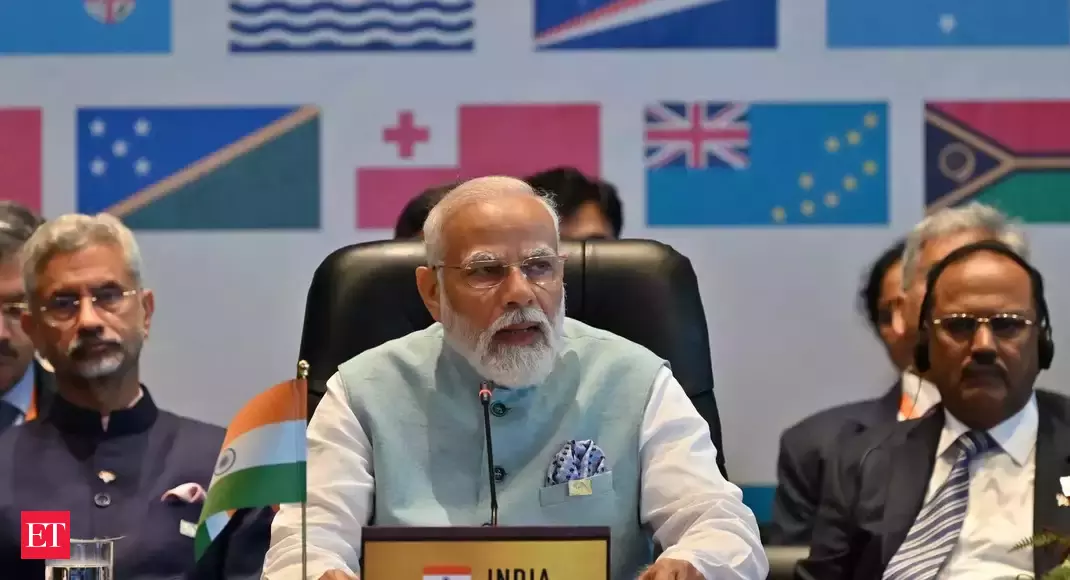

During the Forum for India-Pacific Islands Cooperation in Port Moresby, Papua New Guinea, India introduced a comprehensive action plan to enhance collaboration with Pacific Island nations, counter China’s growing influence in the region, and extend support as a trusted friend. Prime Minister Narendra Modi emphasized India’s commitment to standing by the regional leaders and addressed the challenges faced by small island countries, including climate change, healthcare, and access to essential resources. Modi underscored the importance of reliable friendships during challenging times and expressed India’s gratitude for the support provided to Pacific Island nations. Although not explicitly mentioning China, the reference to untrustworthy partners was a clear allusion to recent developments in the region.
Modi’s visit to Papua New Guinea was significant in the context of countering Beijing’s efforts to increase its sway over strategically important islands in the Indo-Pacific. India sought to project a more inclusive and cooperative partnership approach, contrasting with China’s assertive methods of influence through infrastructure and developmental loans. Papua New Guinea Prime Minister James Marape praised Modi’s leadership within the Global South and urged him to advocate for the concerns of Pacific Island states, such as climate change and the repercussions of the Ukraine conflict, in forums like the G20.
During the summit, Modi unveiled a 12-point action plan designed to strengthen India’s engagement with Pacific Island nations while addressing their developmental aspirations and fostering a shared vision for a free and open Indo-Pacific. The plan encompassed various sectors, including healthcare, renewable energy, cybersecurity, and industry development. India pledged to establish a state-of-the-art cardiology hospital in Fiji and provide assistance in dialysis services and sea ambulances to all 14 Pacific Island states. Initiatives such as the “Jaipur Foot Camp” offering prosthetic limbs and the introduction of “Jan Aushadhi Centres” for affordable medicines were also proposed. Additionally, India aimed to upgrade the Centre of Excellence for IT in Papua New Guinea to a Regional Information Technology and Cybersecurity Hub and establish helpline facilities in Fiji and other countries. The plan encompassed support for small and medium industries, solar-powered government buildings, desalination units, and educational opportunities through scholarships and training programs.
Modi emphasized India’s willingness to share its expertise in various fields and to collaborate in areas such as digital technology, space technology, health security, and food security. He reiterated India’s support for a free, open, and inclusive Indo-Pacific, respecting the sovereignty and integrity of all nations. Modi called for greater representation of the Global South in the UN Security Council and stressed the shared priority of reforming international institutions.