



A University of Auckland researcher says improving healthcare access for Pacific children with respiratory illnesses requires health systems to better understand the cultural, spiritual and social worlds families navigate when seeking care.
Dr Sainimere Boladuadua’s research,Understanding the Fourth Space: The Key to Improve Access to Health Care for Children With Acute Respiratory Infections in Fiji, published in AlterNative: An International Journal of Indigenous Peoples, explores the concept of the Fourth Space, a framework that brings together Indigenous knowledge, Christian faith and Western medicine to better understand how healthcare decisions are made in Pacific communities.
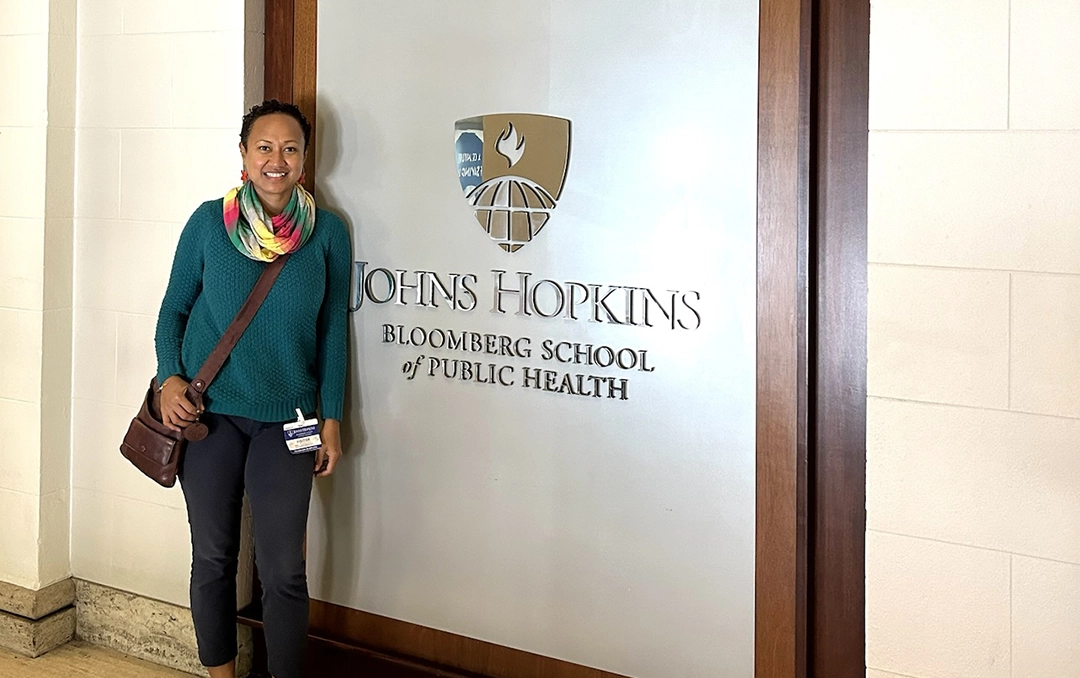
A public health medicine specialist and a doctoral candidate at the University, Dr Boladuadua (Somosomo, Taveuni, vasu i Levuka-i-Yale, Kadavu/Fiji) is also a recent Fulbright fellow, she spent 10 months at the Centre for Indigenous Health (CIH) at the Johns Hopkins Bloomberg School of Public Health in Baltimore last year. Her work explores improving access to care for Indigenous populations, focusing on children with acute respiratory infections in Fiji.
The newly published paper demonstrates that many existing healthcare models fail to account for the realities of Indigenous and Pacific families, with acute respiratory infections one of the leading causes of illness and death among children worldwide.
“Health systems often assume people make decisions based solely on biomedical information,” says Dr Boladuadua.
“But for many Pacific families, health and wellbeing are influenced by a much broader set of relationships that include culture, spirituality, family obligations and community expectations. These factors are not separate from healthcare decisions. They are central to them.”
Boladuadua, whose research draws on Indigenous Fijian perspectives, describes the Fourth Space as the intersection of three worlds: traditional Indigenous understandings of health, Christian beliefs and practices, and Western biomedical healthcare systems.
Rather than viewing these approaches as competing, she says that families frequently move between them, drawing on each according to their needs and circumstances.
The research suggests that healthcare services designed solely around Western models may inadvertently create barriers for families whose understandings of health are shaped by multiple knowledge systems.
“Too often, cultural knowledge and spirituality are treated as peripheral to healthcare,” says Boladuadua. “Recognising the Fourth Space creates opportunities for more responsive and effective care that aligns with the lived experiences of Pacific peoples.”
The implications extend beyond Fiji. Boladuadua says the framework may help health professionals, policymakers and researchers better understand why inequities in healthcare access persist across many Indigenous and Pacific populations despite the availability of effective treatments.
The paper also highlights the importance of working alongside communities to develop culturally safe approaches to care, including greater recognition of Indigenous knowledge, family structures, spiritual practices and community-based support networks.
As health systems across Aotearoa New Zealand and the Pacific seek to improve outcomes for children and families, Boladuadua hopes the framework will encourage a broader conversation about what meaningful access to healthcare truly looks like.
“Healthcare access is not just about whether services are available,” she says. “It’s also about whether people feel seen, understood and respected when they seek care.”